Read Research Papers With AI: A Careful Workflow for Faster Understanding
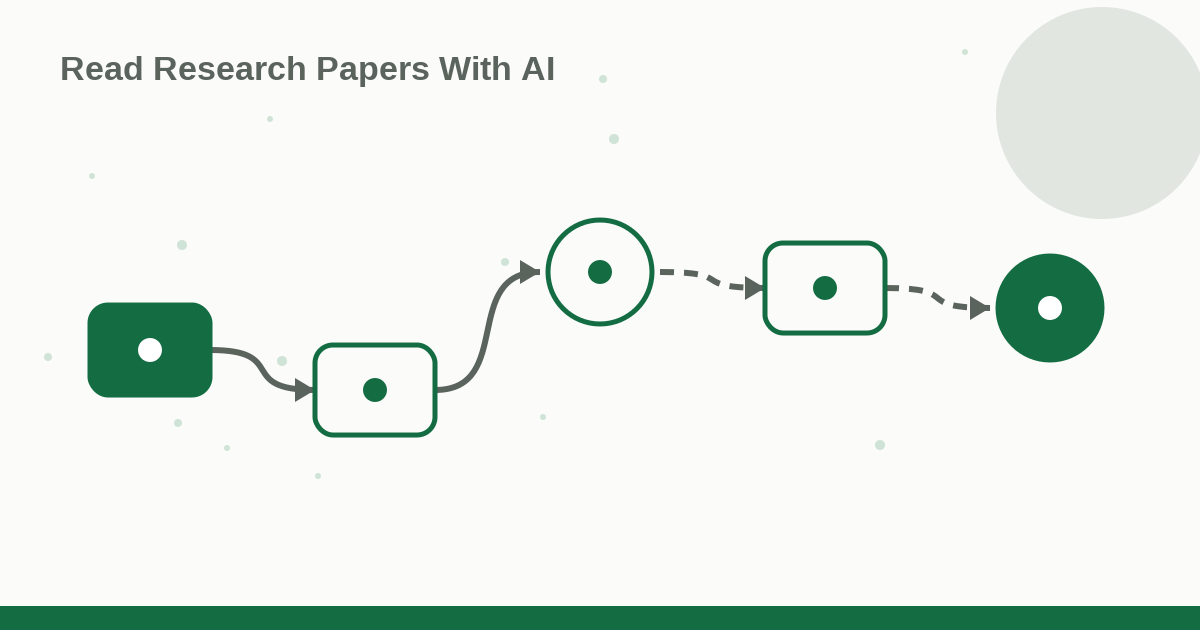
You can read research papers with AI more quickly, but speed is not the same as understanding. AI can preview a paper, explain jargon, summarize sections and help you compare studies. It can also misstate a result, miss a limitation or invent a citation. The safest approach is to use AI as a guide to the paper, not a replacement for it: read the abstract, methods and results yourself, check every number you plan to use and verify all references. This guide gives a workflow for students, professionals and curious readers, based on our earlier research of AI assistants and deep research tools.
What AI helps with and where it fails
AI helps with previews, plain-language explanations, glossaries, comparisons and organizing notes. It fails when it silently skips details, merges findings from different studies, misreads tables and figures or states conclusions more strongly than the authors do. Papers also contain caveats and statistical details that summaries often flatten.
Step 1: Decide why you read research papers with AI
Write a one-line purpose: "I need to know whether this method works for small samples" or "I want the main finding for a presentation." Your purpose tells you which sections to read closely. Reading without a purpose leads to summaries that feel complete but answer nothing useful.
Step 2: Preview with the abstract and structure
Paste the abstract, or the title and headings, and ask the AI for a preview: the research question, the method and the main claim. Compare it with the abstract to see whether it matches. Then decide whether the paper is worth reading in full.
Step 3: Read the paper yourself first pass
Skim the introduction's last paragraph, the methods headings, the figures and the discussion. Note questions. Then use AI to explain what you did not understand, section by section, pasting the exact text rather than asking from memory. Ask it to quote the passage it relies on.
Prompts that work well
- "Explain this paragraph in plain English for a non-specialist, then list the terms I should look up."
- "What is the research question, sample, method and main result? Quote the sentences you used."
- "List the limitations the authors mention, and any you think they missed."
- "Explain what this figure shows, then tell me what I should check in the table to confirm it."
- "Define these terms the way this paper uses them.
Step 4: Check methods and numbers yourself
The method and sample determine how much weight a result deserves. Check sample size, how participants or data were selected, controls, measurement and statistical methods. Verify any number you want to quote directly in the paper's tables. If a result matters to a decision, read the full methods section and consider asking an expert.
Step 5: Verify citations
AI can produce references that look real but do not exist, or attribute claims to the wrong paper. Search for each citation in a database or the publisher's site before using it. When a paper cites another for a key claim, read the cited paper if the claim matters. See our guide to deep research AI tools for tools that provide sources.
Step 6: Take notes you can trust
Create a note per paper: citation, question, method, sample, main findings, limitations, key quotes with page numbers and your own thoughts. Ask AI to draft the summary, then edit and mark what you verified. Organize notes by topic using AI projects; see our ChatGPT Projects guide and Claude Projects tutorial.
Comparing several papers
Ask AI to build a table comparing the papers' questions, methods, samples, results and limitations, using only text you provide. Then check the table against the originals. Watch for differences in definitions and populations that make results hard to compare. A fair comparison needs careful reading, not just a neat table.
Privacy and permissions
Check the publisher's terms before uploading full papers to AI tools, and avoid uploading unpublished or confidential manuscripts, such as papers you are peer-reviewing. Many journals restrict this. See our guide on whether it is safe to upload files to ChatGPT, and check your institution's own policy.
Example: a nurse reviewing evidence
A nurse wants to understand whether a new patient-education method helps. She pastes the abstract and methods of three papers, asks for a plain-language summary and a table of samples and results, and reads the original methods to confirm. She finds one study had a very small sample and notes that in her summary. She verifies the citations and brings the findings to her team as questions to discuss, not as settled facts.
Common mistakes
- Relying on summaries without reading methods.
- Quoting numbers you did not check.
- Trusting AI citations.
- Uploading confidential manuscripts.
- Mixing up correlation and causation.
Reading different kinds of papers
Experiments and trials
Check randomization, controls, sample size, outcome measures and whether results are statistically and practically significant.
Reviews and meta-analyses
Check how studies were found and selected, how quality was judged and whether the included studies are comparable.
Qualitative studies
Look at how participants were chosen, how themes were developed and whether quotes support the claims.
Preprints
Remember that preprints have not been peer reviewed. Treat findings cautiously and look for later versions.
Building a reading habit
Set aside regular sessions, read one paper at a time and write a three-sentence summary in your own words before checking the AI's. Over time you will rely less on previews and more on your own skills. Keep a list of papers to revisit and a log of questions that arose.
Questions to ask about any claim
- Who funded the study, and could that influence results?
- Is the sample like the group I care about?
- Did the authors measure what they say they measured?
- Have other studies found something similar?
- What would change my mind?
Final tip
When you cite a paper, cite the paper itself, not the AI summary. Tell readers where claims come from, and be clear about the limits of the evidence you read.
Related reading
For more tools grouped by job, browse our AI tools by profession guide.
FAQ
Can AI summarize a research paper accurately?
It can give a useful overview, but it may miss details or misstate results. Check key points in the paper itself.
Can AI find research papers?
Some tools search the web and cite sources, but you must verify that each paper exists and says what is claimed.
Is it okay to upload a paper to an AI tool?
Check the publisher's terms and your institution's policy, and never upload confidential manuscripts you are reviewing.
How do I check an AI summary?
Compare it with the abstract, read the methods and results, and verify numbers in the tables.
Should I cite AI?
Cite the original papers, not the AI tool. Follow your institution's rules on disclosing AI use.
Conclusion
To read research papers with AI responsibly, use it to preview, explain and organize, while you read methods and results, verify numbers and check every citation. AI can make you faster; only careful reading makes you right.
Sources and methodology
This guide is based on our earlier research and testing of AI assistants, automation, productivity and writing tools, linked throughout. It contains no vendor pricing or legal claims beyond those attributed below. Features, prices and platform rules change; check each provider's current terms.