Automate CRM Updates With AI: Notes, Fields and Follow-Ups Without Dirty Data
Teams that automate CRM updates with AI are trying to fix a familiar problem: salespeople hate data entry, so the CRM is incomplete, and incomplete data makes forecasts and follow-ups unreliable. AI can turn call notes and emails into structured updates, suggest next steps and draft follow-ups. But a CRM is a system of record, and an AI that writes the wrong stage, amount or contact into it creates problems that spread. This guide covers a workflow with validation, approval and privacy controls, based on our earlier research of automation platforms and AI sales tools.
What to automate and what to keep human
Good candidates are logging call and meeting notes, summarizing email threads, suggesting next steps, creating follow-up tasks and drafting emails. Keep humans in charge of deal stages, amounts, close dates, discounts and anything with commercial or legal weight. Automate the writing, not the decisions.
Step 1: Decide what a good record looks like before you automate CRM updates with AI
List the fields that matter: contact details, company, deal stage, amount, next step and date, source and notes. Write definitions for each stage so everyone uses them the same way. AI cannot fill fields reliably if the team itself is unsure what they mean.
Step 2: Choose your approach
Options include the AI features built into your CRM, meeting recorders that sync notes, and automation platforms that connect email, calendar and CRM. See our Zapier vs Make vs n8n comparison, our guide to Make.com AI templates and our AI customer service for small business guide for related tools. Start with the simplest approach that works with your CRM.
Step 3: Design the workflow
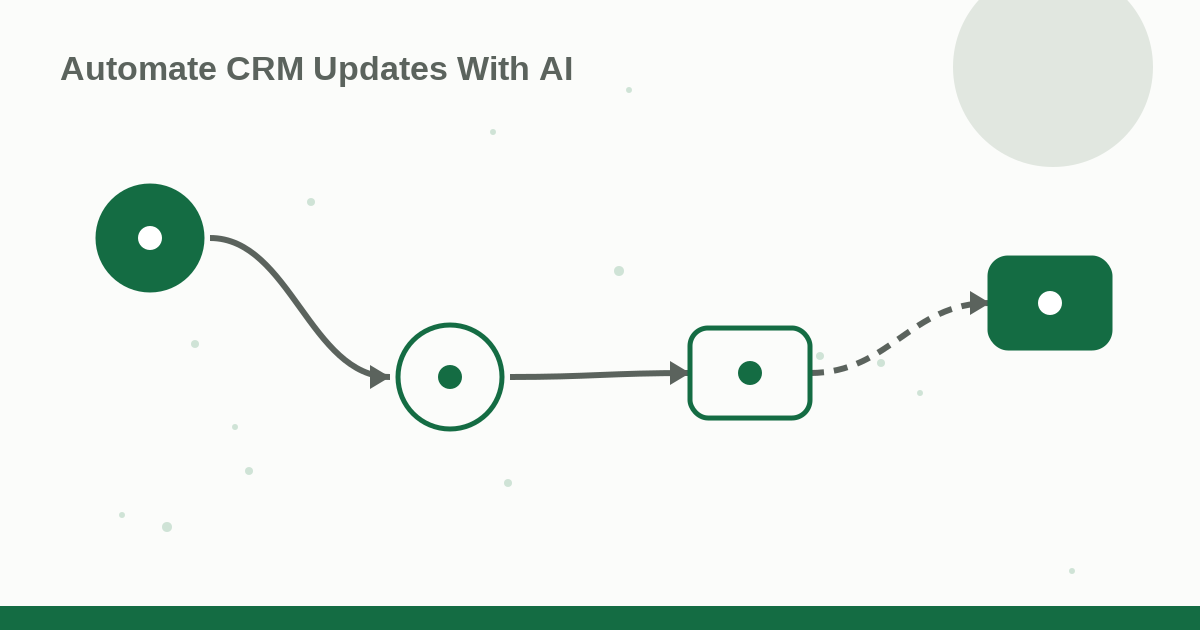
A typical flow: a call or email ends, AI summarizes it, extracts fields such as next step and date, drafts a follow-up and sends the proposed update to the salesperson for approval. Only after approval does the update go into the CRM. Keep the original notes linked so people can check the source.
Prompts and instructions that work well
- "From these call notes, list: attendees, decisions made, objections, next step, next step date. If something is not mentioned, write 'not mentioned'. Do not guess."
- "Draft a short follow-up email confirming the next step and date. Use only the facts in the notes."
- "Suggest which deal stage fits the notes according to these stage definitions, and quote the sentence that supports it."
- "Flag anything in the notes that suggests risk, such as budget concerns or a missing decision-maker.
Step 4: Add validation rules
Validation catches many errors: dates must be in the future, amounts must be numbers within a range, stage changes must follow allowed paths, required fields cannot be blank and contacts must match existing records. Flag unusual changes, such as large amount changes or a deal jumping to closed-won, for review.
Step 5: Keep a human approval step
Show the salesperson the proposed changes side by side with the notes. One-click approve or edit keeps the effort small while preserving accuracy. Over time, you can reduce review for low-risk fields, such as notes, while keeping approval for stages and amounts. See our guide to human-in-the-loop AI automation.
Step 6: Protect contact data and consent
CRMs hold personal data. Check that recording and transcription follow consent rules for your region, that AI tools meet your security needs and that you only keep data you need. Do not paste CRM exports into unapproved tools. For general principles, see our guide on whether it is safe to upload files to ChatGPT. Respect opt-outs and unsubscribe requests.
Step 7: Pilot with one team
Start with a few salespeople and one workflow, such as logging call notes. Measure time saved, field completion rates, error rates and user satisfaction. Collect examples of mistakes and refine prompts and rules. Expand only when results are good.
Step 8: Monitor data quality
Track the share of records with a next step, the number of duplicate contacts, stage changes reversed and forecast accuracy. Audit a sample of AI-written updates each week at first. Have a way to turn the automation off quickly if it misbehaves.
Follow-ups and sequences
AI-drafted follow-ups save time, but keep them personal and accurate. Do not send automatically without review unless messages are low-risk and consent is clear. Avoid sending messages that promise things the salesperson has not agreed to. See our guide to an AI email assistant for drafting habits.
Example: a five-person sales team
A small software company connects its call recorder, an automation platform and its CRM. After each call, AI drafts notes, a next step and a follow-up email. Reps receive a message with proposed updates and approve or edit them in seconds. Validation blocks changes to amounts above a threshold without a manager's review. After a month, notes are logged on 95 percent of calls instead of about half, and managers trust the pipeline report more.
Common mistakes
- Letting AI change stages and amounts automatically.
- No validation rules.
- Ignoring consent for recordings.
- Poor field definitions.
- No monitoring after launch.
Measuring value
Compare time spent on admin per rep, the share of calls with logged notes and forecast accuracy before and after the pilot. Ask reps whether the system saves them effort or adds review work. If reviews feel like extra work, simplify the approval screen.
Questions to ask before connecting systems
- Which fields may AI fill, and which may it only suggest?
- Who owns the automation if it fails?
- What are the consent rules for recording and storing notes?
- Can we roll back changes if an update is wrong?
Final tip
Keep a log of AI-written CRM updates that reps corrected. Patterns in the corrections show which prompts and rules need work, and which fields should stay manual.
Governance
Name an owner for the automation, document what it does and review access and permissions quarterly. Treat it like any other system touching customer data.
Verify the details before you commit
Start with one low-risk update, such as logging a call summary against a contact, and run it on a dozen records before touching your whole pipeline. Keep a person in the loop for any change that overwrites existing data. Check your CRM's own documentation for field limits, API quotas and audit logs, and keep a way to undo a bad batch.
FAQ
Can AI update my CRM automatically?
It can draft updates from notes and emails, but important fields such as stages and amounts should be approved by a person.
What should I automate first?
Logging call and meeting notes and drafting follow-ups are low-risk starting points.
How do I avoid bad data?
Use clear field definitions, validation rules, human approval and regular audits.
Is it safe to put CRM data into AI tools?
Use approved tools with suitable data terms, avoid exporting contact lists into general tools and follow consent rules.
Will AI replace manual CRM work?
It reduces typing and admin, but people still make decisions and check accuracy.
Conclusion
To automate CRM updates with AI safely, define good records, let AI draft summaries, fields and follow-ups, add validation rules and require human approval for high-impact fields. Protect contact data, pilot with one team and monitor data quality so the CRM stays trustworthy.
Sources and methodology
This guide is based on our earlier research and testing of AI assistants, automation, email and productivity tools, linked throughout. It contains no vendor pricing or legal claims beyond those attributed below. Features, prices and platform rules change; check each provider's current terms.